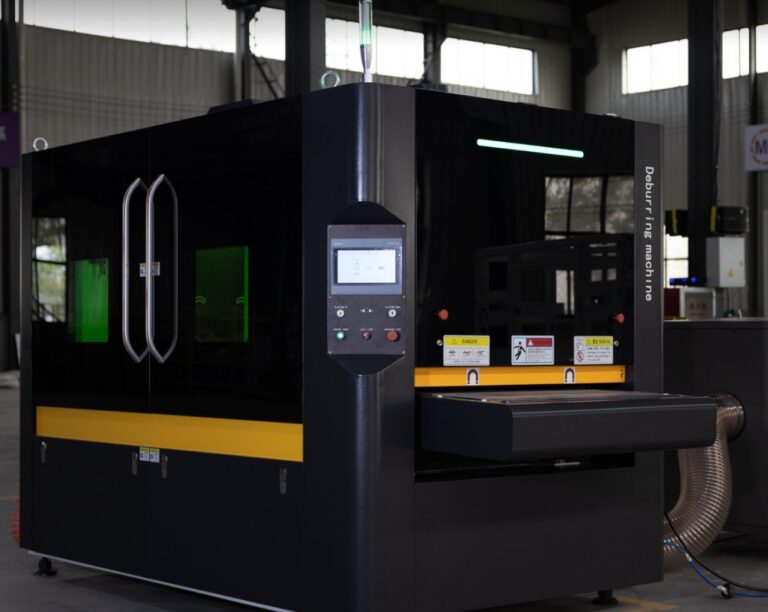
Launching our extensive examination involving programmable apparatuses designed optimized for burr elimination possess upgraded fabrication processes, serving substantial positive effects across tempo and standard. Our article reviews the different types of devices, containing scrubbing coating tools, spinning devices, and state-of-the-art numerical platforms. We will review the pros of integrating these solutions, featuring minimized employee overhead, better part consistency, and heightened fabrication capacity.
Profile Beveling Machines: Meticulous Completing Explained
Border smoothing machines offer a modern solution for realizing meticulous refining on products. Beyond manual methods, these mechanized fixtures guarantee uniform effects and notably strengthen operation potency. They commonly adopt various abrasive instruments like circular heads, glossing wheels, or custom shapes to clear sharp tips and spurs. These kinds of method is key in a wide spectrum of applications, like healthcare and technology.- Elevate face condition
- Diminish assembly fees
- Amplify turnover and operation
Residuum Cleaning Apparatuses: Producing Spotless, Superior Surfaces
State-of-the-art foundry routines predictably yield significant amounts of dross, a byproduct that, if left, can severely weaken the value of the finished item. Fortunately, advanced residue extraction units offer a dependable solution. These custom machines, employing techniques like scouring, are designed to painstakingly eliminate this unwanted material, ensuring a immaculate and excellent surface. The resulting benefits include lessened rejection rates, refined aesthetic appeal, and an overall boost in fabrication rate. By utilizing leading slag removal technology, manufacturers can consistently deliver high-grade surfaces and meet stringent guidelines.
Sheet Metal Polishing: The Benefits of Deburring Devices
Achieving a first-rate appearance on sheet metal modules is imperative for functionality, and deburring mechanisms deliver significant positives over human-operated methods. Eradicating burrs efficiently not only elevates the overall quality of the entity, but also deters expected failures during assembly and deployment. Furthermore, computer-operated deburring processes raise production velocities and reduce staff spending.
Boosting Sheet Metal Production with Automatic Deburring
In an effort to improve capability in sheet metal manufacturing, implement mechanized deburring technologies. Classic deburring is frequently drawing-out and liable to errors. Utilizing automatic deburring affords remarkable advantages, comprising curtailed workforce requirements, superior assembly standards, and higher fabrication speed. Such spending may efficiently generate profits.Selecting the Right Deburring Equipment for Your Assignment
Recognizing the most suitable deburring equipment for your distinct needs demands a exhaustive assessment of several factors. To begin with, review the classification of resource you're operating on – aluminum requires varying techniques than thermoplastic. Next, take into account the extent and design of the sections needing deburring. Finally, review your manufacturing rate; a continuous operation commands a distinct type of equipment than a occasional one. Omitting to recognize these considerations probably yields inadequate results and augmented charges.
Edge System Technology: Directions and Advances
Recent deburring machine operation is participating in rapid innovation, motivated by the calls for for augmented exactness and throughput in production processes. Central advances consist of the incorporation of smart solutions for elastic burr removal procedures, alongside developments in abrasive device. We're besides tracking a growth in portable finishing machines suited for localized processes, and fresh approaches like hydraulic burr elimination are attracting momentum. The direction suggests towards greater association of surface refining machines within the automated plant locale.
Elevating Alloy Module Durability with Edge Smoothing
Many fabrication processes for brass parts introduce sharp edges, which can result in stress accumulations and fragilities that compromise overall performance. Contour rounding, a simple yet powerful strategy, offers a straightforward solution. It entails slightly trimming the harsh edges of a section during the fabrication stage. This moderates stress zones, heightens operational ability, and can eliminate rupturing. Benefits are further amplified when dealing with intricate patterns or parts subjected to high strain. Considerations include the suitable blend of the softened edge and its impact on joining with other sections.
- Minimizes Stress Spots
- Raises Operational Strength
- Thwarts Fracturing
Waste Discharge vs. Deburring : Recognizing the Separations
While many operators use the designations “slag cleaning” and “deburring” as if they were the same, they stand for distinct actions in metal manufacturing techniques. Edge cutting focuses on get rid of the sharp, often tiny, spurs created during processing operations—these are excess remnants of metallic left on the component. Residue elimination, conversely, addresses those offshoot – typically a mixture of impurities – that occurs during processes like smelting. Essentially, deburring deals with subsidiary flanges, while slag removal deals Sheet Metal Finishing Deburring Machine with the waste of a separate process. In brief, programmable deburring and residuum removal apparatuses are fundamental components of modern metal creation that ensure high-quality finished products with reduced defects and enhanced efficiency.Finishing the analysis focuses on the vital role of modern automated deburring technologies in influencing production criteria and enabling businesses reach improved productivity and excellence.